Related story
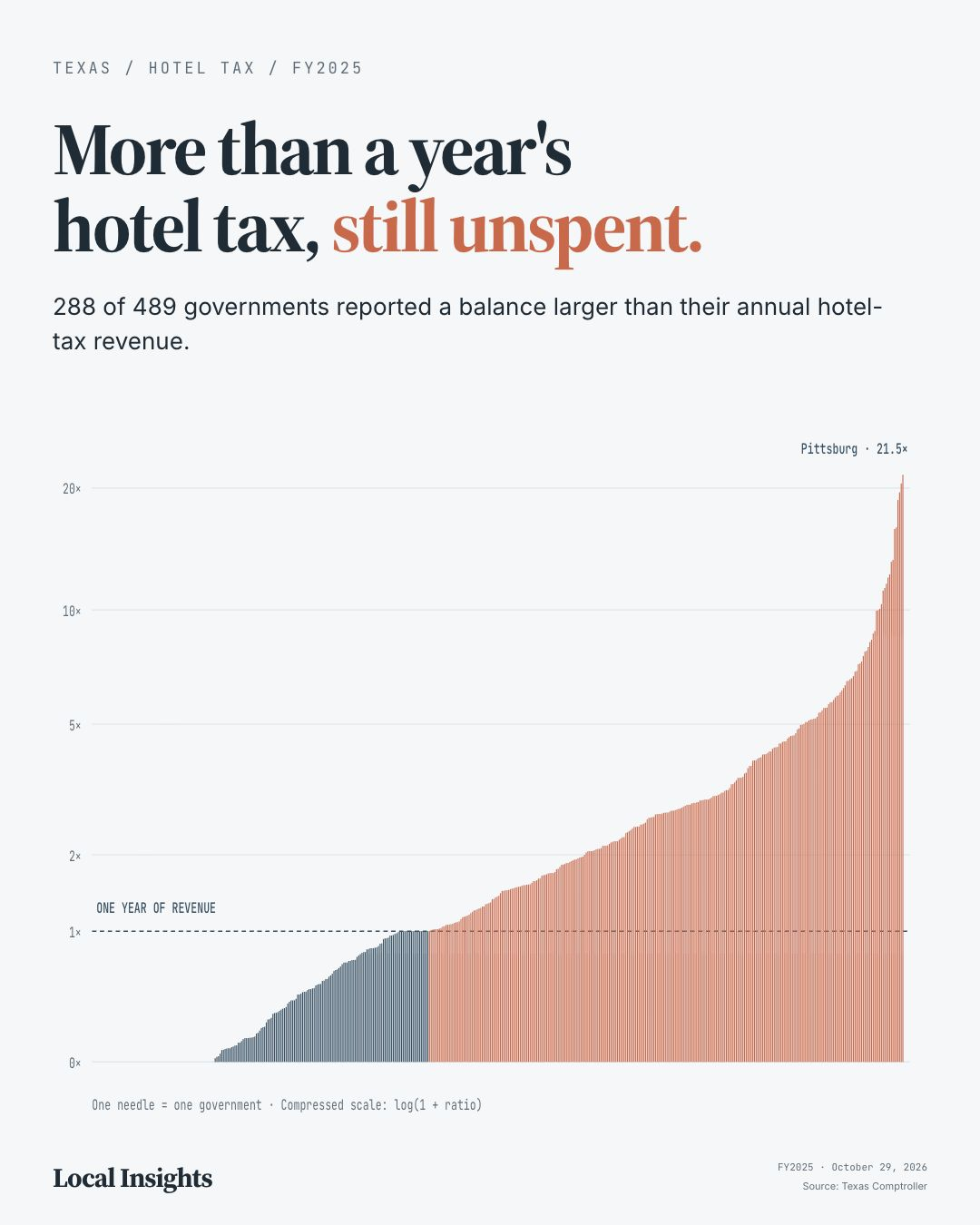
More than a year's hotel tax, still unspentA transmission plan becomes a route across somebody’s land. Texans need to see which routes have legal approval, what local governments have actually adopted, and what remains unresolved before equating a planning decision with construction.

This entry provides context and source notes. Its detailed explanation remains in the original build; a separate visual breakdown has not yet been authored here.
A source-linked tracker and companion story following five Permian Basin Reliability Plan applications: two signed route approvals totaling approximately 424.2 miles, one reported conditional approval, two applications with further review reported, and eight counties with documented adopted opposition actions.
Put route authority, county objections, upcoming records and the evidence behind each decision in one inspectable public register.
A transmission plan becomes a route across somebody’s land. Texans need to see which routes have legal approval, what local governments have actually adopted, and what remains unresolved before equating a planning decision with construction.
Open the full visualizationFive applications form three tracked import paths. Approved mileage sums only selected routes in two inspected signed orders: 242.56 and approximately 181.6 miles, displayed as approximately 424.2. Eight unique county governments have inspected adopted opposition records, including conditional or county-specific routing actions. This historical minimum is not a statewide census or a verified current-position count. Approval is separate from construction and energized status. Reported decisions, proposed routes, research leads and automated filing checks do not inflate approved totals.
Related story
More than a year's hotel tax, still unspent