Related story
More than a year's hotel tax, still unspentMost residents believe one city governs them. In reality a stack of special districts levies taxes and carries bonded debt that a handful of voters approved. Making that stack — and the debt-per-vote behind it — legible is the first step to holding it accountable.

This entry provides context and source notes. Its detailed explanation remains in the original build; a separate visual breakdown has not yet been authored here.
A hyperlocal civic tool for Kingwood: pick your village and see the full stack of governments that can tax your lot, the bonded debt each one carries in your name (with a calculator that turns your appraised value into what you pay a single district per year), and the turnout in the election that authorized that debt — surfacing the gut-punch metric of debt authorized per vote cast.
Built to reveal the layered local governments — a Municipal Utility District, the county, the school district, a community college, the city — that overlap on a single Kingwood lot. Every figure is primary-source-confirmed and linked in the UI; any field a district has not disclosed renders blank or "pending," never an estimate presented as fact.
Most residents believe one city governs them. In reality a stack of special districts levies taxes and carries bonded debt that a handful of voters approved. Making that stack — and the debt-per-vote behind it — legible is the first step to holding it accountable.
Open the full visualizationDistrict figures produced by an enumerate → gather → adversarial-verify → synthesize workflow: each figure is independently re-confirmed against a primary source, with anything unconfirmable left null. Outstanding bonded debt from the Texas Bond Review Board; adopted M&O and debt-service tax rates from the Harris County Tax Office / Comptroller SPD database; parcel and connection counts from HCAD and district bond official statements; turnout and bond authorizations from Harris County Clerk records.
Related story
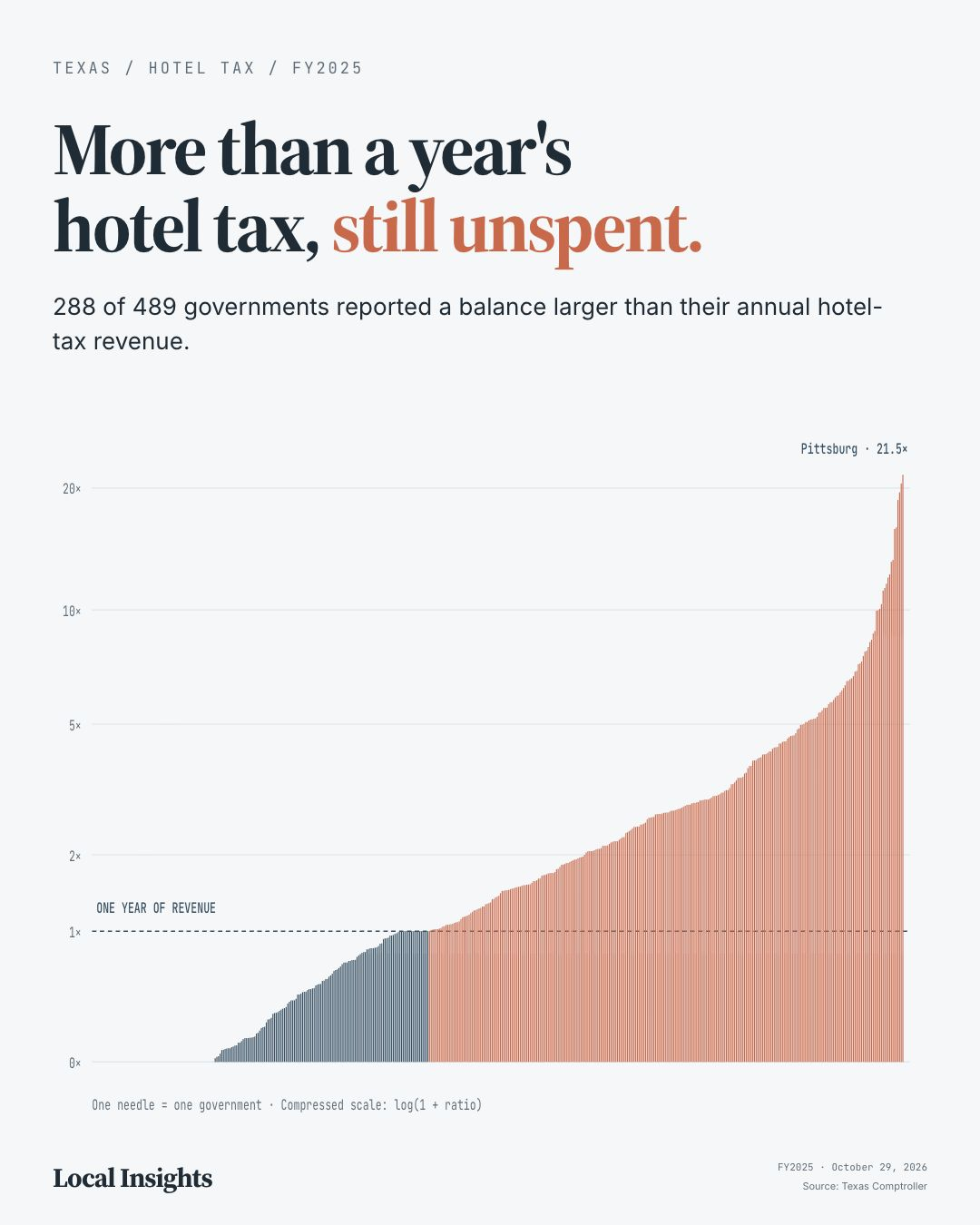
More than a year's hotel tax, still unspent